
Reviewed · DOLPHIN WATCHING
Gran Canaria: Dolphin Watching Eco Boat Tour in Small Group
Dolphins, minus the noise. I like the combo of a quiet hybrid electric boat and marine biologist guidance, because you get both the thrill of spotting cetaceans and the why behind what you are seeing. The main thing to consider is that a smaller, slower boat can mean a different spotting rhythm than bigger tours, and not everyone always feels the explanations as strongly.
Set sail from Pasito Blanco Harbour on Gran Canaria, in a small group capped very tightly (up to 10 participants, and described as a maximum of 8 guests), for a 3-hour outing that feels personal without being precious. You also get onboard refreshments and fruits, but there are no meals, so plan to eat after you come back.
In This Review
- Quick Takeaways
- Pasito Blanco at 9:00, and why the departure point matters
- Senda del Azul, the hybrid Rodman 1100 experience
- Skipper Victor and marine biologist Paula: what you’ll get out of it
- What you might spot off Gran Canaria (and how to think about success)
- The 3-hour flow: from boarding to whale-and-dolphin watching
- Small group size, and why it changes the whole vibe
- Onboard inclusions: drinks, fruits, and the missing meal
- What to bring, what not to do, and who should skip this
- Price and value: is $100 worth it?
- Should you book this Gran Canaria dolphin eco boat tour?
- FAQ
- Where does the tour depart from?
- What time does the tour start?
- How long is the dolphin watching tour?
- How many people are on the tour?
- What languages are offered for the live guide?
- What marine animals might you see?
- What is included in the price?
- Is a meal included?
- What should you bring, and what is not allowed?
- Is the tour okay for kids, and who should avoid it?
Quick Takeaways
- Hybrid, electric-powered engines help keep the water quiet and less disruptive
- Marine biologist Paula joins the skipper, so you get real context, not just spotting
- Rodman 1100 Senda del Azul is set up for comfort on the water
- Cetaceans to look for include bottlenose, Atlantic spotted, common dolphins, Risso’s dolphins, striped dolphins, and short-finned pilot whales
- Small group size (up to 10, often run with up to 8) makes it easier to hear and pay attention
- Onboard inclusions cover drinks and fruits, but you will still need a meal plan
Pasito Blanco at 9:00, and why the departure point matters
This is a south-coast Gran Canaria dolphin watching tour that starts at 9:00 local time from Pasito Blanco Harbour. If you want calmer, more comfortable conditions, a morning start is usually the smart move, and Pasito Blanco is a straightforward place to begin your day. Your meeting point is specific: Pontoon: Ribera, Mooring R04.
You do not need to bring anything complicated. Just dress like you expect to be on open water for a few hours. A hat and sunscreen are listed for a reason, even when the vibe is breezy.
More boats leaving the island marinas:
- Gran Canaria: Catamaran Dolphin Watch Cruise with Snorkeling★ 4.4 · 4,761 reviews
- Gran Canaria: Dolphin and Whale Watching Cruise★ 4.2 · 2,537 reviews
- From Puerto Rico de Gran Canaria: Dolphin Watching Cruise★ 4.3 · 2,520 reviews
Senda del Azul, the hybrid Rodman 1100 experience
The boat is the Senda del Azul, described as a spacious Rodman 1100 built for whale and dolphin watching. The big practical win here is propulsion. The tour uses a hybrid system with two electric engines, which is designed to keep the trip quiet and emission-free.
Why you should care: when the boat is quieter, the animals are more likely to behave naturally around you. You also get a more relaxing experience. Instead of straining to hear over engine noise, you can actually follow the crew’s guidance and listen to what the marine biologist is pointing out.
There is one potential trade-off. A smaller boat can move differently than larger catamarans. If you are expecting the fastest possible dash to the newest sighting, you may notice the rhythm is not identical to the big-boat scene.
Skipper Victor and marine biologist Paula: what you’ll get out of it
This tour is led by a crew that includes skipper Victor and marine biologist Paula. That matters because the goal is not just to find animals. It is to help you understand what you are seeing.
In plain terms, expect the marine biologist angle to focus on the behavior and identity of cetaceans, plus how to watch responsibly. The crew also has a strong marine-protection mindset, which shows up in the rules. You will not be allowed to touch marine life, and that constraint is part of why the whole experience feels more respectful than a thrill-only encounter.
One note from a practical standpoint: small-group tours can be more communicative, but explanations can still land differently depending on the day and the group. If you are someone who wants constant, detailed narration the entire time, keep that in mind and be ready to enjoy the animals even if the talk varies.
What you might spot off Gran Canaria (and how to think about success)
The tour targets cetaceans that are frequently seen around Gran Canaria. The list is specific, so you can calibrate your expectations before you go. You may spot:
- Bottlenose dolphins
- Atlantic spotted dolphins
- Common dolphins
- Risso’s dolphins
- Striped dolphins
- Short-finned pilot whales
Here is the way I recommend you think about it: treat dolphin sightings as the highlight, not a guaranteed checklist. These animals move, conditions change, and the crew’s job is to locate them while keeping the approach gentle. The hybrid boat helps with the quiet part, while the crew’s expertise helps with the search part.
Also, the small-group nature can change your experience even when sightings are brief. When the group is small, you can hear instructions, spot movements sooner, and get a more “watch closely” feel, not just a mass scramble at the rails.
More boats out looking for dolphins:
The 3-hour flow: from boarding to whale-and-dolphin watching
The tour is 3 hours from start to finish, and most of that time is spent out on the water. While the day does not include stops ashore, the pacing still has natural beats.
- Boarding and settling in at Pasito Blanco Harbour, with your crew ready to guide you.
- Sailing out quietly on the hybrid electric setup, so your attention stays on the water.
- Watching and learning as the marine biologist and skipper share context on marine life.
- On-the-water refreshments during the outing, since included items cover drinks and fruits.
- Return to the harbour after the 3-hour outing.
What helps most is mentally preparing for “wait and watch.” The best moments often arrive after a stretch of scanning. If you get impatient easily, you might want to bring a small snack habit for yourself after the tour, since there are no meals included.
Small group size, and why it changes the whole vibe
This is sold as a small-group experience with a cap of up to 10 participants, and the experience is also described as maximum of 8 guests for an intimate feel. Either way, you are not going to be part of a crowded stampede.
In real-world terms, a smaller group gives you:
- easier conversation with the crew
- less chaos at viewing spots
- a better chance to understand what you are seeing as it happens
- a more “listen and look” atmosphere
It also tends to match the overall eco approach. When a tour feels controlled, people usually follow the rules better. The operator explicitly forbids touching marine life, and the small setting helps that message stick.
Onboard inclusions: drinks, fruits, and the missing meal
Included with the tour are water, organic drinks, WeWhale Fin & Foam Beer, plus fresh and dry fruits. That is a nice mix. You are covered for hydration, and the fruits give you something light while you are out on the water.
What is not included is meals. So if your day starts early and you are hungry when you meet at 9:00, plan to eat before you go or be ready to eat after you return. It is the simplest way to avoid the common half-day frustration.
What to bring, what not to do, and who should skip this
The essentials are straightforward:
- Hat
- Sunscreen
- Comfortable clothes
And one clear rule: touching marine life is not allowed.
There is also a comfort guideline. The tour is not suitable for people prone to seasickness. If you usually feel bad on boats, do not gamble. For this kind of outing, feeling queasy quickly turns a dolphin-and-whale hunt into a bad memory.
Price and value: is $100 worth it?
At $100 per person for a 3-hour small-group dolphin watching tour, you are paying for three things at once: a purpose-built whale and dolphin viewing setup, a hybrid electric propulsion model, and expert guidance from a marine biologist plus a skipper.
Could you find cheaper big-boat options? Sure. But cheap often means loud engines, more people, and less personal attention. Here, the price lines up with the value you get from a quieter ride and a crew that is focused on marine protection. If your priority is learning as much as spotting, and you want a calmer, smaller-group experience from the south coast, this price can feel fair.
It is also worth noting the trade-off people discuss: a smaller boat can be slower to the scene than large vessels. If your only goal is maximum chance of seeing something in the shortest time, consider that. If your goal is a respectful, educational outing that feels less like a crowd event, the setup makes more sense.
Should you book this Gran Canaria dolphin eco boat tour?
Book it if:
- you want a small-group dolphin and whale watching experience
- you care about a quiet, hybrid electric approach
- you like learning from a marine biologist while you watch
- you can handle open water and are not prone to seasickness
- you want drinks and fruits included, with no meal pressure
Skip it or look for an alternative if:
- you are likely to feel seasick on the water
- you expect a nonstop, high-speed race to sightings above all else
- you prefer a tour where explanations feel constant and uninterrupted, no matter what
If you match the first list, this is a very solid way to spend 3 hours on Gran Canaria, with a crew that clearly takes sea life seriously and a boat designed to keep things calm for both you and the animals.
FAQ
Where does the tour depart from?
It departs from Pasito Blanco Harbour, Pontoon: Ribera, Mooring R04 in Gran Canaria.
What time does the tour start?
The start time is 9:00 (local time).
How long is the dolphin watching tour?
The tour lasts 3 hours.
How many people are on the tour?
It is described as a small group with a maximum of 8 guests, and it is also listed as limited to 10 participants.
What languages are offered for the live guide?
The live tour guide is available in English, French, and Spanish.
What marine animals might you see?
You may spot bottlenose dolphins, Atlantic spotted dolphins, common dolphins, Risso’s dolphins, striped dolphins, and short-finned pilot whales.
What is included in the price?
Included are the 3-hour dolphin watching tour, the expert crew (skipper and marine biologist), the hybrid vessel with electric engines, plus water, organic drinks, WeWhale Fin & Foam Beer, and fresh and dry fruits.
Is a meal included?
No, meals are not included.
What should you bring, and what is not allowed?
Bring a hat, sunscreen, and comfortable clothes. Touching marine life is not allowed.
Is the tour okay for kids, and who should avoid it?
Children under 3 years old participate for free. It is not suitable for people prone to seasickness.
Just added on Gran Canaria
- Family Monster 4 Seater Buggy
★ 5.0 · 1 review - Catamaran Eco Tours in Gran Canaria
★ 5.0 · 1 review - Flying Dress Photoshoot in Gran Canaria
★ 5.0 · 1 review - Cheese Workshop
★ 5.0 · 1 review - Canarian cheese tasting
★ 5.0 · 1 review - Private Transfer Gran Canaria Port to Gran Canaria Airport (LPA)
★ 5.0 · 1 review
Dolphin Watching, compared.
Catamaran Dolphin Watch Cruise with Snorkeling
Read our review →

Palmitos Park Ticket with Dolphin and Bird Shows
Read our review →
Dolphin and Whales watching cruise from Puerto Rico de Gran Canaria
Read our review →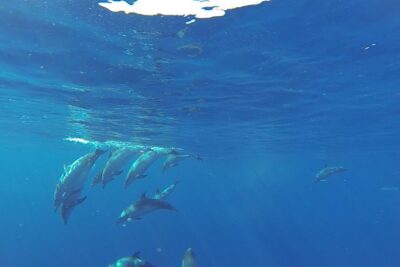
Dolphin and Whale Cruise in Puerto Rico, Gran Canaria
Read our review →
Browse the lists this tour appears in