
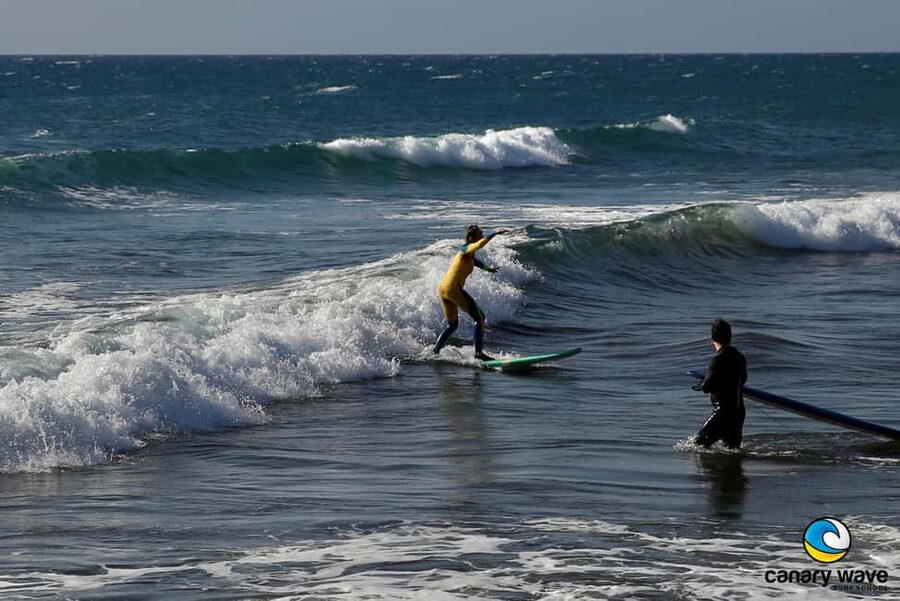
Reviewed · MELONERAS RESORT TOURS
Gran Canaria: Meloneras Beach Surf Lesson
Learning to surf starts with one small skill.
At Meloneras Beach in Gran Canaria, this 2-hour lesson is built around quick wins, starting with balance and standup practice on the sand before you ever paddle out. I love the pro-led, skill-level teaching, and I also love how the session is paced with real breaks so you are not just surviving the waves.
One thing to keep in mind: if conditions are flat at the usual spot, the instructor will take your group to another location to chase the best waves of the day. That means the exact surf setting can shift, even though the lesson structure stays the same.
In This Review
- Key highlights you will care about
- Meloneras Beach Surf Lesson: What You Actually Do in 2 Hours
- Meeting by the Faro de Maspalomas: Getting Set Up Fast
- Theory and a Safety Briefing You Can Actually Use
- Standup Practice on the Sand: Where Beginners Gain Control
- Two Water Sessions: The Hour One Learning Curve
- Rest Break and Second Round: Don’t Burn Out
- How the Instructor Finds Better Waves When Conditions Change
- Languages, Group Skill Levels, and Individual Feedback
- Equipment Included: Wetsuit and Surfboard, No Shopping Required
- Price and Value at $58 per Person
- What You Must Bring (and What You Should Pack Anyway)
- Rules to Know Before You Go Into the Waves
- Who Should Book This Surf Lesson, and Who Might Skip It
- Should You Book the Meloneras Beach Surf Lesson?
- FAQ
- Where is the meeting point?
- How long is the surf lesson?
- What is included in the lesson price?
- What should I bring?
- Is this activity suitable for children?
- What happens if there are no waves at the usual spot?
- Do you provide water, snacks, or sunscreen?
- Is alcohol or drugs allowed during the lesson?
- Can I cancel and get a refund?
Key highlights you will care about
- Sand-first coaching helps you stand up before you deal with the wave part
- Two chunks in the water (plus a recharge break) keeps energy up
- Safety briefing and standup practice reduce the usual beginner stress
- Equipment is provided so you do not waste vacation time shopping or renting
- Wave scouting if needed means you still have a real chance to catch rides
Meloneras Beach Surf Lesson: What You Actually Do in 2 Hours
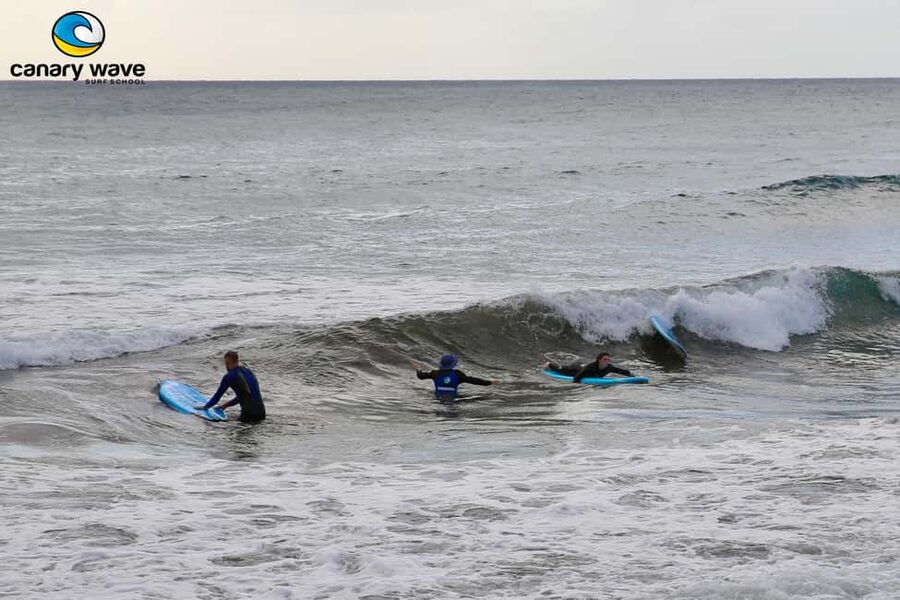
This is a practical surf lesson, not a “watch and hope” experience. You show up, get fitted with a wetsuit and surfboard, and then the instructors guide you step-by-step toward the first goal most people have: standing up and catching a wave at least once, and ideally building repeat attempts.
The lesson runs about 2 hours, which is a sweet spot if you want something active without losing a whole morning or afternoon. You get a guided theory segment, you practice on the sand, and then you hit the water in two rounds, with a short pause to rest and reset between them.
And yes, location matters. Meloneras sits in the wider Maspalomas area, so you get a classic coastal feel with plenty of space for beginner practice. The meeting point is right by the faro de Maspalomas, so you are not hunting for a “secret” beach entrance.
More from the Meloneras strip:
- Maspalomas – Meloneras : e-Scooter 2 seat Sunset Guided Tour★ 4.9 · 44 reviews
- Maspalomas – Meloneras : e-Scooter 2 seat Sunset Guided Tour★ 5.0 · 30 reviews
- Gran Canaria Private Transfer from Las Palmas airport (LPA) to Costa Meloneras★ 4.5 · 13 reviews
Meeting by the Faro de Maspalomas: Getting Set Up Fast
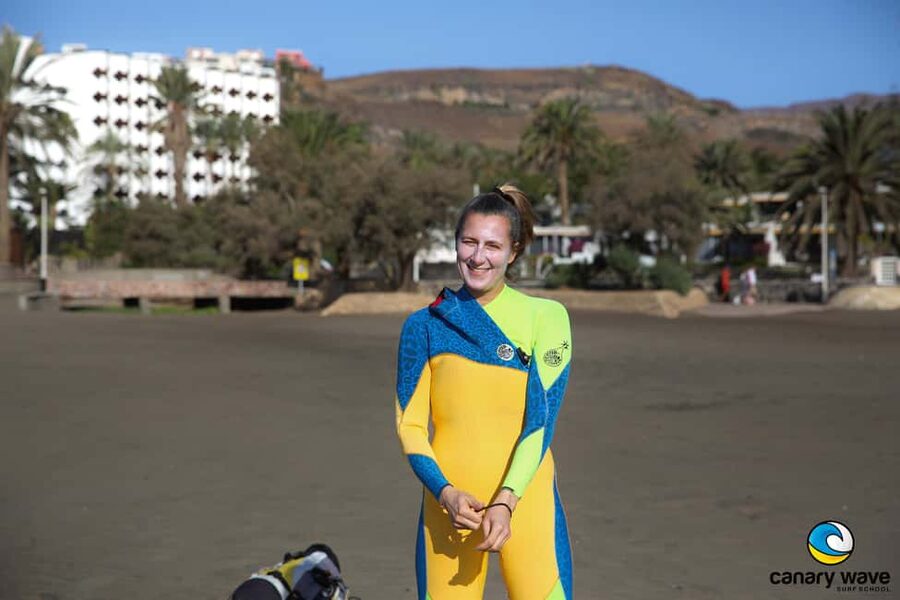
You meet just in front of the Faro de Maspalomas. That is helpful because it is an easy visual landmark, and you can arrive with confidence that you will find your instructor and group without drama.
Once you are in the right place, the first part is all about fit and readiness. You will be matched with a wetsuit and surfboard. This matters more than people think. A board that is too small or a wetsuit that does not fit right can turn a fun lesson into constant frustration, especially in your first hour when you are learning to stand while the board stays unstable.
You also learn the basics of what to do before you go into the waves, including safety rules. Surfing is simple in theory and a bit physical in practice, so starting with a calm, clear structure helps you settle quickly.
Theory and a Safety Briefing You Can Actually Use
Right before sand practice, you get a theory session plus a safety briefing. The point is not to bury you in ocean science. It is to give you the rules that keep you safe and help you understand what the instructor expects when you are on the board.
In a beginner-friendly lesson like this, you want the safety talk to translate directly into action. You want to know how to handle your board, how to respond when conditions change, and what to focus on so you stop wasting energy on guesses.
I like that the structure moves from explanation into drills. You are not stuck listening for too long, and you are not thrown into the deep end with zero context. You should feel like you are learning a method, not just copying random movements.
Standup Practice on the Sand: Where Beginners Gain Control
Then comes one of the best parts: standup practice on the sand. This is where your brain gets to learn the position without wave pressure, without paddling fatigue, and without the fear of getting knocked down.
Your instructor has you practice standing up using a repeatable setup. That is a big deal, because most first-timers struggle with the same issue, not lack of courage. The challenge is usually balance, foot placement, and getting your body to move at the right moment.
If you do this part well, the water session becomes less about panic and more about trying again. In other words, the sand drills turn the next stage from chaos into a checklist you can follow.
Pro tip for your own comfort: bring beachwear and a towel. You will likely be moving between dry and wet spots, and having a towel ready makes the whole transition feel smooth.
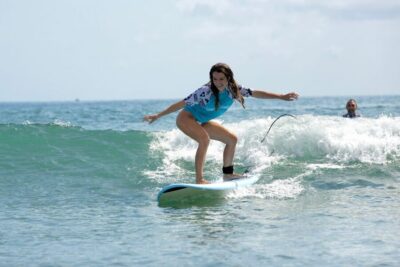
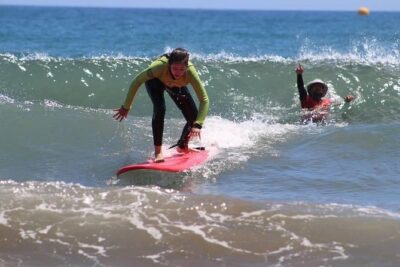
Other lessons on the island breaks:
Two Water Sessions: The Hour One Learning Curve
After sand drills, you head into the water for about one hour. This is where your coaching should feel most specific, because you are finally applying what you practiced.
A good instructor does two things at once:
- They correct your technique in the moment.
- They help you understand what to change next time, not just what went wrong.
One reason this lesson earns strong feedback is the way instructors provide clear, practical guidance and adjust for each participant. In a session like this, you do not want generic tips. You want feedback on your stance and the moment you pop up, since that is the difference between falling instantly and getting even a short ride.
Rest Break and Second Round: Don’t Burn Out
After the first hour, you take a short break. Then it is back in for more surfing practice.
This break is not just a nice-to-have. It keeps your session productive. Surf lessons fail when everyone is exhausted, because then you do not learn well. You do not just get tired, you start losing form, and form is the whole point of learning.
The second water session gives you a chance to apply what you figured out during the first round. You should feel a shift from fear-based attempts to more controlled tries.
If you are improving, that is when it clicks.
How the Instructor Finds Better Waves When Conditions Change
Here is the realistic surf truth: sometimes the waves do not cooperate. In this lesson, the plan accounts for that. If there are no waves at the usual spot, the instructor will take you to another location to search for the best waves of the day.
I like this approach because it protects your time. You booked a surfing lesson, not a lecture about waves. By looking for better conditions, the instructors help you keep the lesson moving and the chances of actually riding something remain strong.
That flexibility also means you should stay mentally flexible. You might do sand drills in one place and surf in another, and that is normal for a day where the ocean is calling the shots.
Languages, Group Skill Levels, and Individual Feedback
The lesson is taught by instructors who speak Italian, English, Spanish, and German. That matters if you want instructions you can understand quickly, especially in surf where timing is everything.
Classes are tailored to the group’s skill level and age. Translation: beginners are not left stranded, and people with some experience are not stuck doing the same starter drill the entire time.
The best part for me is what this kind of tailoring implies. It means the instructor should be watching your technique closely and offering feedback that matches what you are actually capable of in that moment. Instructors who take the time to give individualized guidance help you learn faster because your next attempt becomes more informed.
Equipment Included: Wetsuit and Surfboard, No Shopping Required
You get surfboard rental and a wetsuit rental as part of the lesson. That is real value, because renting on your own can turn into a time sink. Here, you show up and get set up immediately.
The equipment also shapes your learning:
- The surfboard size and type helps you stabilize while you practice standing.
- The wetsuit helps you stay comfortable so you can focus on technique instead of shivering through the learning phase.
Since the session includes both sand and water practice, you will feel the benefit of having the right gear across the whole timeline.
Price and Value at $58 per Person
This lesson costs $58 per person for about 2 hours. On paper, surf lessons can look like they vary wildly in price. What makes this one feel like good value is the tight structure and what is included: equipment, safety briefing, coached sand practice, and time in the water across two sessions.
If you are comparing, look beyond the headline price. A cheaper option that gives you equipment but not real coaching tends to waste your time. A more expensive option that spends most of the time “waiting for waves” can also feel expensive, even if the ocean is doing its job.
Here, the lesson is built to keep you learning during the full experience window:
- Sand practice before water
- An hour of surfing
- A break
- A second hour of surfing
For most first-timers, that added practice time and step-by-step guidance is what justifies the cost.
What You Must Bring (and What You Should Pack Anyway)
The basics are simple:
- Towel
- Beachwear
But there is a small list of things that are not included. The lesson does not include snack, water, hat, or sunscreen. So plan like you are going to be in the sun and moving around.
I recommend you pack:
- Water, so you stay hydrated during the breaks
- Sunscreen, because coastal sun can be sneaky
- A hat if you are prone to getting cooked
- A snack if you know you get hungry after active lessons
Think of it like this: you are buying coaching and equipment. You are responsible for keeping your body comfortable between sessions.
Rules to Know Before You Go Into the Waves
A couple of rules help keep things safe and fair for everyone:
- Alcohol and drugs are not allowed.
That is a good reminder that this is an active sports lesson with safety priorities. You will learn better when you are alert, focused, and not feeling off.
Who Should Book This Surf Lesson, and Who Might Skip It
This is best for people who want beginner-friendly structure with real instructor support. It is also a good match if you have no board time yet and you want the learning curve to feel manageable.
It is not suitable for children under 8. If you are traveling with younger kids, you would need a different activity.
If you are already surfing a bit, this lesson can still help because the coaching is designed for group skill level. Your instruction should target what you can improve now, rather than starting from zero every time.
Should You Book the Meloneras Beach Surf Lesson?
If your priority is learning real fundamentals fast, I think you should book it. The sand-first method, the safety briefing, and the two water sessions make the most of your time. You are also not left scrambling for gear since the wetsuit and surfboard are included.
I would hesitate only if you hate the idea that conditions might shift and you could be taken to another spot to find better waves. Surf depends on nature, and this lesson respects that.
For most people, though, the trade is worth it. You get coached practice, not just access to a beach. And in a place like Meloneras, that is how you turn a vacation day into a story you can actually tell, because you stood up on a wave instead of just watching other people do it.
FAQ
Where is the meeting point?
You meet just in front of the Faro de Maspalomas.
How long is the surf lesson?
The duration is 2 hours.
What is included in the lesson price?
You get a surfboard rental, wetsuit rental, the surfing lesson, a safety briefing, standup practice on the sand, and surfing practice in the water.
What should I bring?
Bring a towel and beachwear.
Is this activity suitable for children?
It is not suitable for children under 8 years old.
What happens if there are no waves at the usual spot?
If there are no waves at the usual beach, the instructor will take the class to another location in search of the best waves of the day.
Do you provide water, snacks, or sunscreen?
No. Snacks, water, a hat, and sunscreen are not included.
Is alcohol or drugs allowed during the lesson?
No, alcohol and drugs are not allowed.
Can I cancel and get a refund?
Yes. You can cancel up to 24 hours in advance for a full refund.
Made by Hand on Gran Canaria
- Playa del Inglés surf lessons
★ 4.8 · 121 reviews - Gran Canaria: Maspalomas Surf Lessons
★ 4.6 · 113 reviews - Gran Canaria Surf Lessons: Playa del Inglés & Maspalomas
★ 4.8 · 76 reviews - Gran Canaria: Stand-Up Paddle Lesson & Snorkeling Tour
★ 4.7 · 49 reviews
Just added on Gran Canaria
- Family Monster 4 Seater Buggy
★ 5.0 · 1 review - Catamaran Eco Tours in Gran Canaria
★ 5.0 · 1 review - Flying Dress Photoshoot in Gran Canaria
★ 5.0 · 1 review - Cheese Workshop
★ 5.0 · 1 review - Canarian cheese tasting
★ 5.0 · 1 review - Private Transfer Gran Canaria Port to Gran Canaria Airport (LPA)
★ 5.0 · 1 review
Meloneras Resort Tours, compared.


Gran Canaria Private Transfer from Las Palmas airport (LPA) to Costa Meloneras
Read our review →
E-Bike CitySightseeing: Maspalomas, Playa Ingles, Meloneras
Read our review →
E-Bike CitySightseeing: Maspalomas Dunes, Playa Ingles, Meloneras
Read our review →Browse the lists this tour appears in