
Reviewed · TEJEDA MOUNTAIN VILLAGE TOURS
Tejeda: Sunset & Night Sky Guided Astronomy Hiking Tour
Gran Canaria turns magical after sunset. On this Tejeda hike, you follow the Camino de Santiago de Gran Canaria toward Ventana del Nublo, then shift from sunset views of Roque Nublo and Teide to a guided night-sky lesson with snacks, blankets, and binoculars. I love how the astronomy is explained in everyday terms, and I love the slow, on-foot transition from day into night.
One thing to plan around: you need your own car to reach the campground meeting point, and weather may require a date change. That is not a dealbreaker, it just means you should build in a little flexibility.
This is a 3-hour, small group tour (max 10 people) led by a live guide in Spanish or English, and telescopes are not part of the experience. If you are after star viewing that feels approachable, not intimidating, this one is built for you.
In This Review
- Key highlights you should know
- Tejeda at night: why this hike feels different
- Walking the Camino route to Ventana del Nublo
- The Ventana del Nublo sunset lesson you actually use
- Learning constellations, planets, and the Milky Way (no telescope required)
- Snacks, hot drinks, and the comfort strategy
- Gear and getting ready: what to bring (and what to wear)
- Logistics in Tejeda: the car requirement is the key detail
- Price and value: what $71 buys you in 3 hours
- Who this tour fits best
- Should you book the Tejeda Sunset and Night Sky Guided Astronomy Hike?
- FAQ
- How long is the Tejeda Sunset and Night Sky guided astronomy hiking tour?
- What is the group size for this astronomy hike?
- What languages are the live guides speaking?
- Is there a transfer or pickup service?
- Where is the meeting point and can I park there?
- What should I bring for the tour?
- Are telescopes used during the tour?
- What time of year or conditions might affect the tour date?
Key highlights you should know
- Camino de Santiago de Gran Canaria walking route, with the day-to-night shift you can actually feel
- Ventana del Nublo sunset with big views toward Roque Nublo and Teide while you get the sky basics
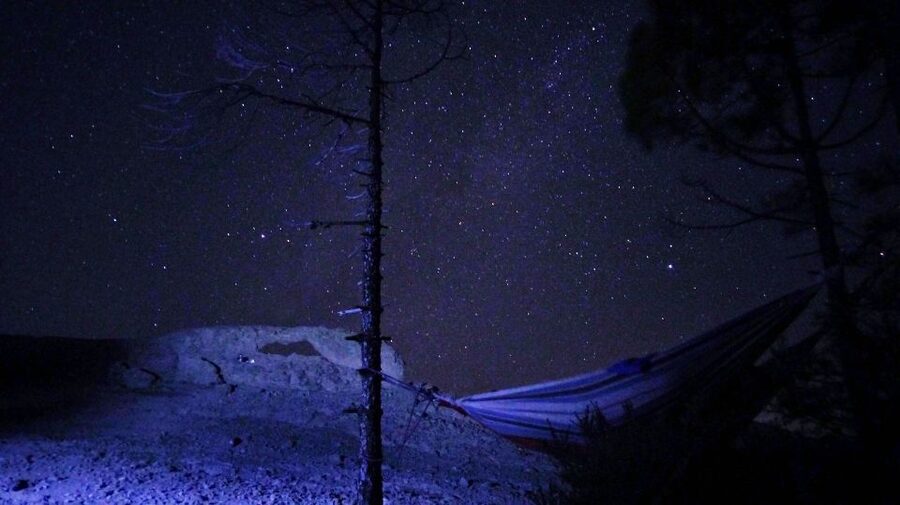
- Constellations, planets, and the Milky Way identified with a guide, plus a screen for explanations
- Snacks, hot drinks, and a blanket, so you can stay comfortable while you look up
- Small group size (10 max), led by astronomy-into-culture style guidance, including canary culture context
- No telescopes used, but binoculars are included for closer star spotting
Tejeda at night: why this hike feels different
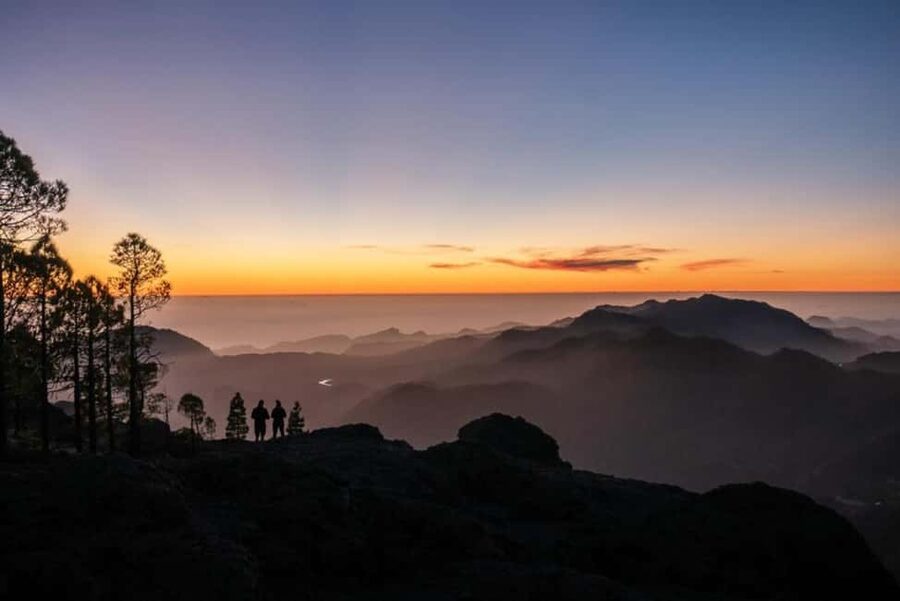
Tejeda is one of those Gran Canaria places where the scenery does not need help. During the day you get dramatic rock formations in the distance, and after sunset you get something more rare, a sky that actually feels big and close.
What makes this tour special is the pacing. You are not just rushed to a viewpoint, snap a few photos, and leave. You hike through forest on a route tied to the famous Camino, then you arrive at Ventana del Nublo in time to watch the last light fade, while your guide sets you up to understand what you are seeing after dark.
I also like that the guiding approach is practical. You learn the basic concepts in a way you can repeat on your own later, even without special gear. The included binoculars and the screen help you bridge that gap between pretty sight and real understanding.
Other trips up to Tejeda:
- Firgas, Tejeda, Guayadeque – VIP Tour Gran Canaria★ 4.5 · 173 reviews
- Full-Day Gran Canaria Tour with Teror, Tejeda and Lunch in Fataga★ 4.0 · 50 reviews
- Gran Canaria from the Heights: Fataga and Tejeda★ 4.7 · 22 reviews
Walking the Camino route to Ventana del Nublo
The experience starts in the center of the island at a campground area, surrounded by mountains. From there, you set out on the Camino de Santiago de Gran Canaria, which adds a sense of rhythm to the tour. You are moving, taking in changing light, and building momentum before you reach the iconic viewpoint.
As you walk, you get the gradual change from day into night. That detail matters more than it sounds. By the time you stop for stargazing, your eyes and your brain have already adjusted from bright colors to dark tones, so the sky lesson lands better.
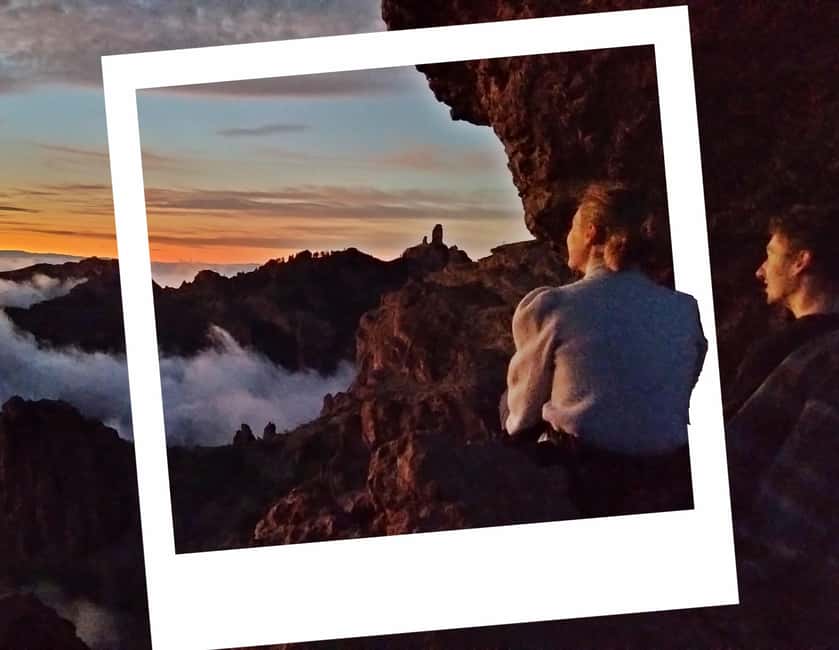
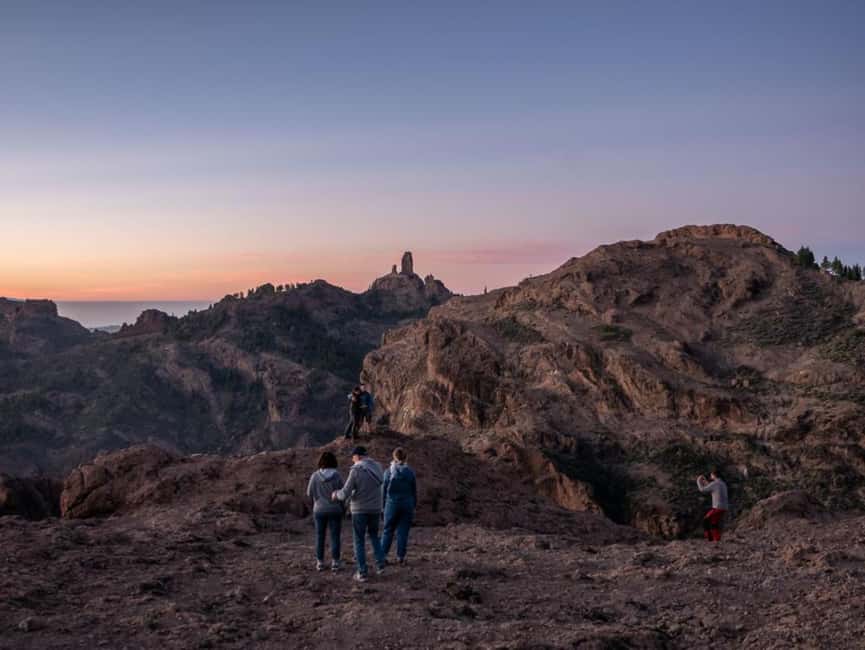
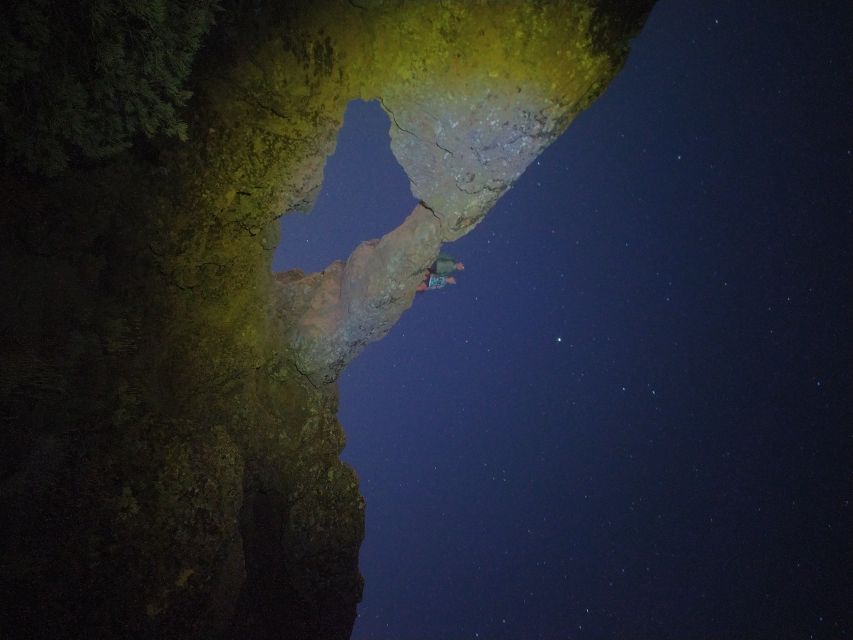
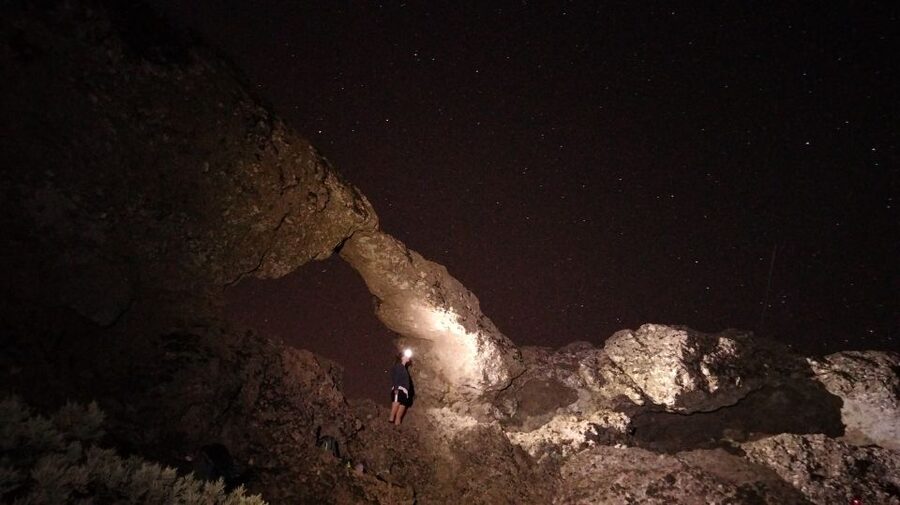
You will reach Ventana del Nublo, one of Tejeda’s headline landscapes. The payoff is a layered view: you can see Roque Nublo and even Teide in the distance, and you get the sunset moment as a moving backdrop to the astronomy talk. It is a good reminder that night-sky viewing is not only about stars, it is about location and timing.
A drawback to keep in mind: the tour includes hiking, so you should be comfortable walking at night (or at least after sunset). Bring good footwear and accept that you will be standing still at the viewpoint while you look up, which means cold can sneak up fast.
The Ventana del Nublo sunset lesson you actually use
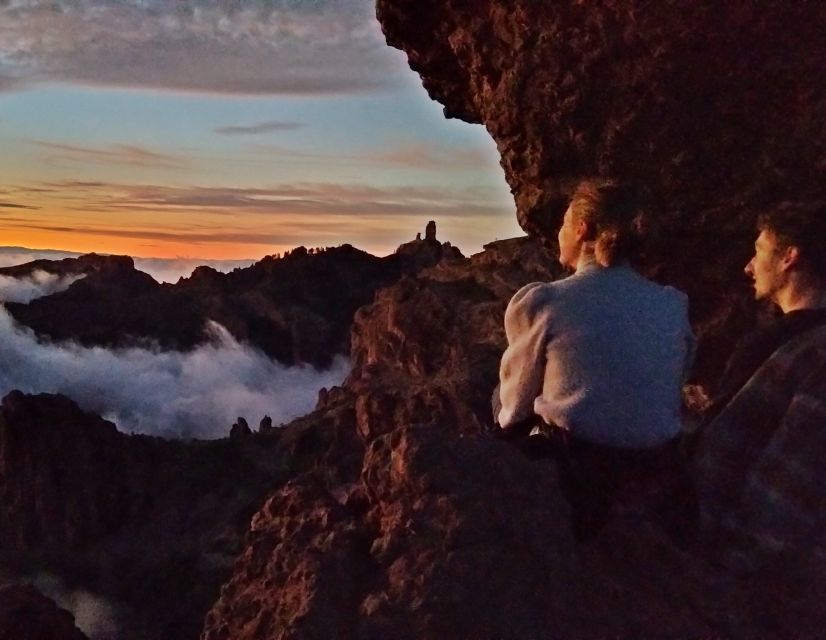
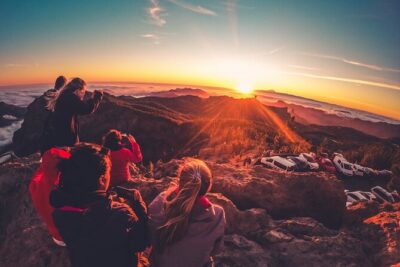
At Ventana del Nublo, the tour shifts gear. The sunset is not treated like a quick photo stop. You watch it while your guide introduces the basic concepts of astronomy as the sky darkens, so the stargazing part feels connected, not random.
This is also where the cultural layer shows up. Your guide shares context about canary culture while you are watching the landscape. That may sound like extra, but it helps you slow down and pay attention, instead of just counting constellations for the sake of it.
The viewpoint is a natural classroom. As the light levels drop, you can practice what the guide teaches in real time: where to look, how to tell what you are seeing, and how to connect the sky to recognizable patterns. You do not need prior knowledge. If you are a beginner, this format is friendly.
And because you are at a famous landmark, the visuals keep working for you. Even when the sky is the focus, you still get those dramatic silhouettes and long-distance views, which makes the whole 3-hour stretch feel like more than a standard stargazing add-on.
Learning constellations, planets, and the Milky Way (no telescope required)
I like this tour for one simple reason: it respects what most people have. Telescopes are not used, and you are not expected to be an astronomy expert.
Instead, you get tools that make a difference without complexity. Binoculars are included, and there is a screen used for explaining concepts. That combination helps in two ways. First, you can follow along even when the dark makes details hard to catch. Second, once you see something through the binocs, you are more likely to recognize it again later with your eyes.
You also practice identifying major targets in the sky: constellations, planets, and the Milky Way. The guide helps you interpret what you see so you can enjoy it on your own in the future. That is a big deal for value, because it turns one night out into reusable knowledge.
A practical note: the Milky Way experience depends on conditions, especially cloud cover and how dark the viewing area is. The tour does the right thing by building the lesson around you actively looking and adjusting, rather than promising a single fixed photo moment.
Other walks into the interior:
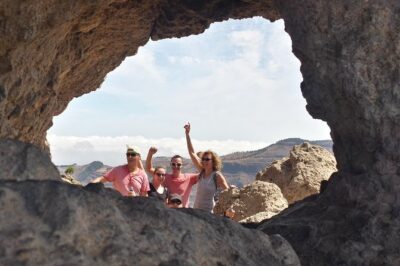
Snacks, hot drinks, and the comfort strategy
Stargazing can be a test of patience, because cold and stillness are real. This tour handles that with comfort basics: you get a blanket, light refreshments, and hot drinks.
The snack-and-sip breaks also serve a purpose. They give you a chance to warm up, then reset your eyes so you can keep paying attention. You are looking up for stretches, and you will feel more focused when you are not fighting the cold the whole time.
In the planning phase, think “layers.” Warm clothing is a must, and warm shoes help too. Even if the hiking portion warms you up, the long viewpoint time can cool you down quickly, especially if there is wind or you are simply standing still.
Also, the tour includes a light. That is helpful for staying safe on paths and for moving around the meeting and start areas without blasting your eyes with harsh glare.
Gear and getting ready: what to bring (and what to wear)
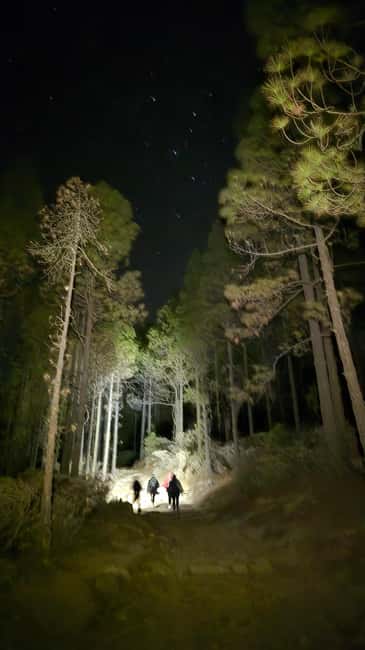
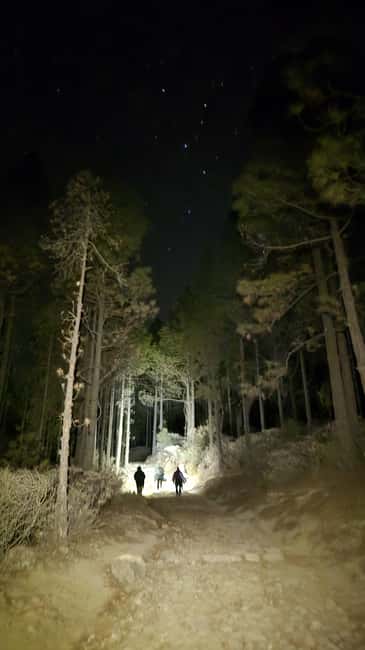
The tour is outdoors and at night, so your clothing choice is part of the experience. Here is what you should plan for based on what the tour asks you to bring:
- Warm clothing (layering beats one thick jacket)
- Hiking shoes for grip and stability
- Use the included blanket if you get cold while watching the sky
Even though binoculars and a screen are provided, you should still come prepared to stand still. That means you want clothes that hold heat and do not get uncomfortable when you stop moving.
If weather is questionable, expect the operator to potentially change the date depending on conditions. That is normal for astronomy nights, but it is worth keeping in mind when you book around a tight schedule.
Logistics in Tejeda: the car requirement is the key detail
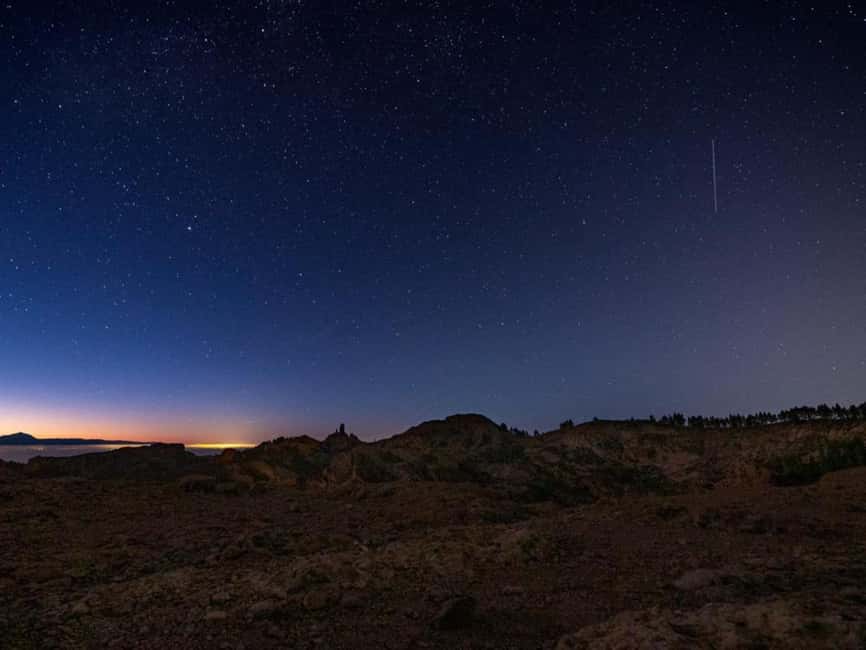
This is not a tour that plugs into public transit. You need your own car to reach the meeting point, and the info is clear that public transport does not work in these zones.
Plan around that, and the rest of the logistics become straightforward. Meet at the campground area in the center of the island. You can park there, which is a relief when you are dealing with a night hike.
Also, because the group is small and the start is tied to timing for sunset, arriving on time matters. If you have limited driving experience on rural roads at night, consider arriving earlier in the day and doing a quick familiarization drive to the meeting area.
Price and value: what $71 buys you in 3 hours
At about $71 per person for a 3-hour guided experience, this tour is priced like a focused activity, not a “watch the sky from a bench” gimmick.
Here is what you are paying for, and why it matters for value:
- A live guide in Spanish or English
- Small group size (max 10), which helps you actually see and ask questions
- Binoculars and a screen, which improves the astronomy lesson
- A blanket plus snacks and hot drinks, which keeps the stargazing part realistic
- A scenic hiking component on a well-known route, so you get both movement and viewpoints
If you are the type who wants to learn something while you travel, this is the kind of price tag that can be fair. You get equipment and guidance bundled together, and the guide helps translate what would otherwise be confusing blur into recognizable patterns.
If you only want a quick star photo and you hate cold, you might find the cost harder to justify. But if you can handle a night hike and want to understand what you are looking at, this is good value.
Who this tour fits best
This is a great match for beginners who want clarity. You do not need a telescope, and the guide teaches how to interpret what you see so you can repeat the experience later.
It also suits couples and small groups. The tone is calm, the focus is shared viewing, and the pacing naturally creates time together without feeling awkward or rushed.
Choose this tour if you:
- Like walking trails with viewpoints, not just sitting
- Want a guided stargazing experience that feels educational
- Can handle cold and standing still while you look up
- Have access to a car for the meeting point
Consider skipping it if:
- You do not drive and cannot get to remote areas by yourself
- You expect telescope-style deep viewing
- You are sensitive to colder conditions during night stops
Should you book the Tejeda Sunset and Night Sky Guided Astronomy Hike?
I would book this tour if you want the combo of scenery plus a learnable stargazing skill set. The Ventana del Nublo sunset, the guided walk on the Camino route, and the hands-on approach to constellations, planets, and the Milky Way make it feel like a real activity, not a checklist.
You should also book if you value small group time. With only up to 10 people, the guide can keep the lesson flowing while you look up, not down at your phone.
Before you commit, be honest about two things: can you bring warm layers and hiking shoes, and can you reliably drive to the meeting point at the right time? If yes, this is one of those Gran Canaria nights that sticks with you, because you leave with knowledge you can use again.
FAQ
How long is the Tejeda Sunset and Night Sky guided astronomy hiking tour?
The tour lasts 3 hours.
What is the group size for this astronomy hike?
The group is small, limited to 10 participants.
What languages are the live guides speaking?
The live tour guide offers Spanish and English.
Is there a transfer or pickup service?
No transfer is available, and you need your own car to reach the meeting point.
Where is the meeting point and can I park there?
You meet at the campground area, and you can park there.
What should I bring for the tour?
You should bring warm clothing and hiking shoes.
Are telescopes used during the tour?
No, telescopes are not used in this activity.
What time of year or conditions might affect the tour date?
Weather conditions can require changing the date for the activity.
Once the Resorts Light Up
- Gran Canaria: Volcano Sunset Tour and Local Food Tasting
★ 4.8 · 769 reviews - GRAN CANARIA: BUGGY TOUR – 100% OFFROAD SUNSET TOUR 1hr 30m
★ 4.0 · 338 reviews - Gran Canaria Sunset & Wild Coast Tour, Cliffs, Natural Pools
★ 5.0 · 48 reviews - Maspalomas – Meloneras : e-Scooter 2 seat Sunset Guided Tour
★ 4.9 · 44 reviews
Just added on Gran Canaria
- Family Monster 4 Seater Buggy
★ 5.0 · 1 review - Catamaran Eco Tours in Gran Canaria
★ 5.0 · 1 review - Flying Dress Photoshoot in Gran Canaria
★ 5.0 · 1 review - Cheese Workshop
★ 5.0 · 1 review - Canarian cheese tasting
★ 5.0 · 1 review - Private Transfer Gran Canaria Port to Gran Canaria Airport (LPA)
★ 5.0 · 1 review
Tejeda Mountain Village Tours, compared.
Firgas, Tejeda, Guayadeque – VIP Tour Gran Canaria
Read our review →
Full-Day Gran Canaria Tour with Teror, Tejeda and Lunch in Fataga
Read our review →
Gran Canaria from the Heights: Fataga and Tejeda
Read our review →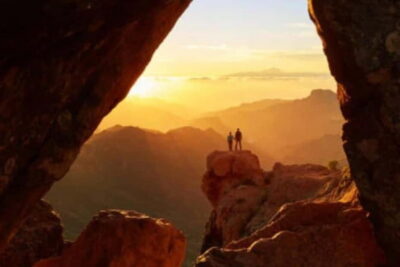
Roque Nublo Base Camp Xperience: Hike, Picnic & More
Read our review →
Browse the lists this tour appears in