Reviewed · TOURS
Excursion to the center of the island Gran Canaria
Gran Canaria’s center is where the island really shows off. This 8-hour outing threads together volcanic scenery and small-town stops in a way that feels unhurried and well-paced. I especially like that it mixes free historical wandering with ticketed nature viewpoints, so you get variety without burning your whole day on transit.
You will also appreciate the human side of the trip. In the best reviews, guides Francine and Naomi are called out for being welcoming and making explanations easy to follow, and the stops are timed so you can browse instead of sprinting.
One consideration: this is a good-weather day. If skies are cloudy, some distance views may be reduced, and the operator may reschedule or refund, depending on conditions.
In This Review
- Key highlights worth your attention
- The island center route: what makes it feel special
- Timing, group size, and tickets that reduce stress
- Telde’s Barrio de San Juan and San Francisco: culture before the climb
- Caldera de los Marteles: volcanic terrain at about 1,530 meters
- Pico de las Nieves: the island’s highest viewpoint for true big-sky moments
- Cruz de Tejeda: 17th-century marker and the center of the island
- Fataga: palms and pine with traditional houses and a valley view
- Degollada de la Yegua: a biosphere reserve viewpoint for quiet nature time
- Lunch and pacing: how the day stays enjoyable
- Price and value: is $108.84 a good deal?
- Who this tour suits best (and who should rethink it)
- Should you book this Center of Gran Canaria excursion?
- FAQ
- How long is the excursion to the center of Gran Canaria?
- What time does the tour start?
- Is English available on this tour?
- Is pickup included?
- How large is the group?
- Which stops include admission tickets?
- What happens if the weather is poor?
- Are service animals allowed?
Key highlights worth your attention
- A focused route through the island’s center, not just coastal photo stops
- Well-timed viewing windows, from 1 hour to 1 hour 30 minutes per stop
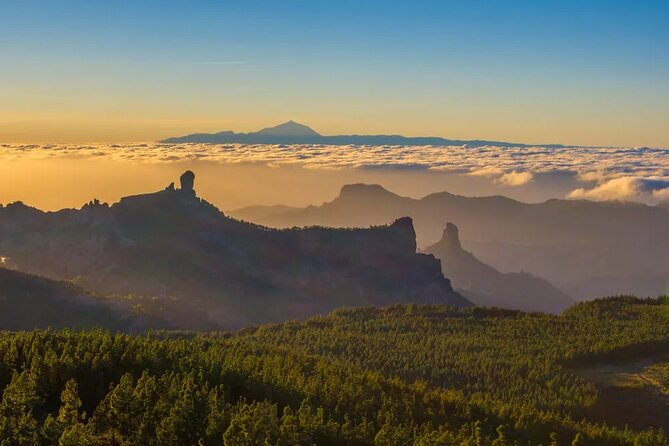
- Pico de las Nieves viewpoint access, with sights like Roque Nublo and Teide on clear days
- Degollada de la Yegua in the Gran Canaria Biosphere Reserve, for a more nature-forward stop
- Small group size (max 20 travelers), which keeps the day friendly and organized
- Telde’s old quarters plus mountain viewpoints, so you get both culture and big views
The island center route: what makes it feel special
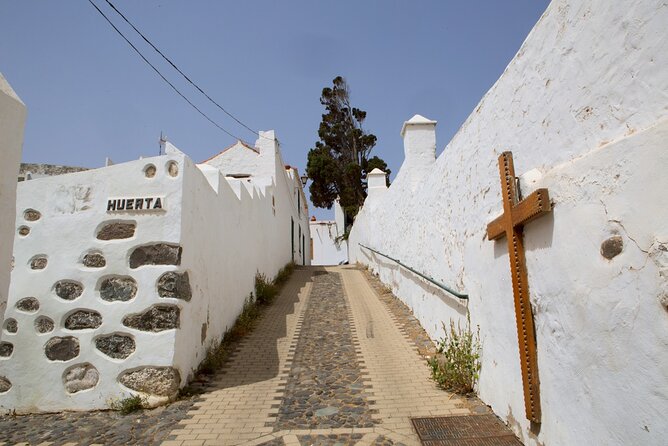
This tour is built around a simple idea: Gran Canaria changes fast as you move inland. Start in a real urban hub at Telde, then climb into volcanic terrain, and finish with mountain viewpoints and a nature reserve area tied to the biosphere concept.
For most people, the surprise is how much you can see in one day without feeling forced. You get multiple time blocks to walk, stand, and look around. That matters, because on Gran Canaria, the best moments often happen when you stop moving and let the views settle in.
The other thing I like is the balance of stop types. Not every stop is a viewpoint, and not every stop is a town. You get churches and plazas in Telde, then caldera terrain, then viewpoints from the highest points, then a traditional-feeling town, then a biosphere reserve viewpoint.
Sizing up the island? A few more that leave from the same resorts:
- Gran Canaria: Catamaran Dolphin Watch Cruise with Snorkeling★ 4.4 · 4,761 reviews
- Maspalomas: Guided Camel Ride in the Maspalomas Sand Dunes★ 4.4 · 4,526 reviews
- Poema del Mar Skip-the-Line Ticket★ 4.8 · 3,856 reviews
Timing, group size, and tickets that reduce stress
The day starts at 9:00 am, with the overall duration running about 8 hours. That timing is ideal if you want a full, satisfying day but still be back in time for dinner plans afterward.
Group size is kept to a maximum of 20 travelers. In practice, that usually means you are not stuck in a crowded bus shuffle every time you leave the vehicle. It also tends to make it easier for the guide to keep an eye on timing, which is a big deal when you have viewpoint stops where everyone wants a moment at the best angles.
You also get a mobile ticket, which is simple on arrival. Pickup is offered, and the experience is offered in English. The trip is designed so most travelers can participate, and service animals are allowed.
Finally, this is explicitly a good-weather experience. If clouds roll in, you may still enjoy the walking and town stops, but far-distance views could be less dramatic. When that happens, you should be ready to go with the flow if the operator offers an alternate date or a refund.
Telde’s Barrio de San Juan and San Francisco: culture before the climb
Stop 1 is Telde, which is the second most important city on the island. The guide focus here is smart. Instead of circling the same central blocks, you center your visit on the neighborhood core areas that explain how the city began.
You will want to spend time around Barrio de San Juan. The walking focus includes the primitive Church of San Juan Bautista and the Plaza Mayor. Even if you are not the type to read plaques for fun, this is the kind of start that helps you get your bearings fast on Gran Canaria. It is where the day stops being just a scenic drive and starts becoming a real cultural journey.
Then you move to Barrio de San Francisco, connected around the same historical orbit. The point of this stop is that these areas are more than narrow streets. They are a compact introduction to local rhythms and architecture, and you get the feel of neighborhoods rather than a checklist of sights.
This stop lasts 1 hour 30 minutes and has free admission. That is a good length for a relaxed wander, especially before the bus starts heading up.
Caldera de los Marteles: volcanic terrain at about 1,530 meters
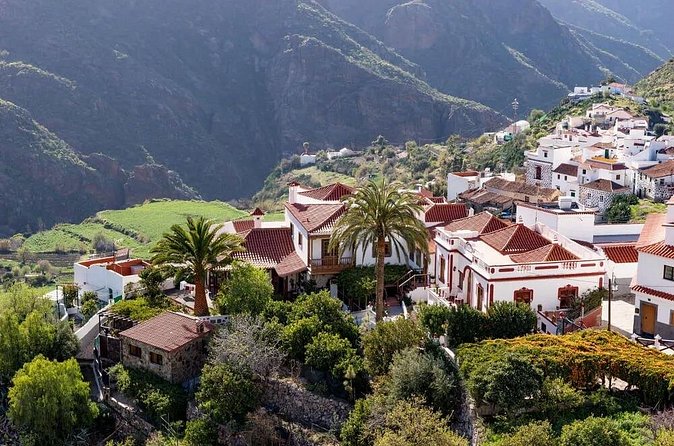
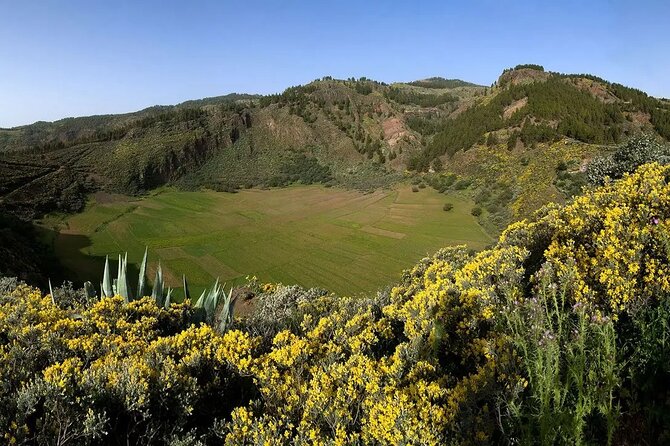
Stop 2 is Caldera de los Marteles, made at the edge of a volcanic caldera. You will be up around 1,530 meters, which is high enough to change the air and the feel of the terrain.
The caldera is one of the nature reserve treasures here. What you should look for is the shape of the terrain itself, the way volcanic activity created the bowl-like structure. From this kind of edge position, you can often sense scale in a way that is hard to get from ground level elsewhere on the island.
This is also a ticket-included stop, and the timing is another 1 hour 30 minutes. That duration is helpful, because viewpoint time up in the mountains is rarely a straight line. You will likely want a few minutes to orient yourself, then time for photos, then a slower walk if the area allows it.
One drawback to keep in mind: higher elevation means you can feel the change in temperature more strongly than you expect. Even when the forecast looks fine for the coast, bring a light layer so you can stay comfortable while you look around.
Other ways the day could go on Gran Canaria:
Pico de las Nieves: the island’s highest viewpoint for true big-sky moments
Stop 3 is Pico de las Nieves, described as the highest viewpoint in Gran Canaria. This is the point in the day where the tour swings hard toward panoramic viewing.
The value here is not just height. It is the network of views you can potentially see from the top. On clear days, you can look toward Roque Nublo and El Roque Bentayga. You can also spot the Tejeda caldera, and if the conditions are right, Teide de Tenerife can even be visible.
The stop time is 1 hour, with admission included. That is usually enough to get a good look, compare distances, and still avoid the feeling that you are stuck in a single spot the entire time. Still, for this stop, you should aim to arrive with your expectations set: weather controls what you can see.
This is also one of those moments where a guide’s direction helps. If you can follow just a bit of explanation about what you are looking at, your viewing time becomes more than scenery. It becomes understanding.
Cruz de Tejeda: 17th-century marker and the center of the island
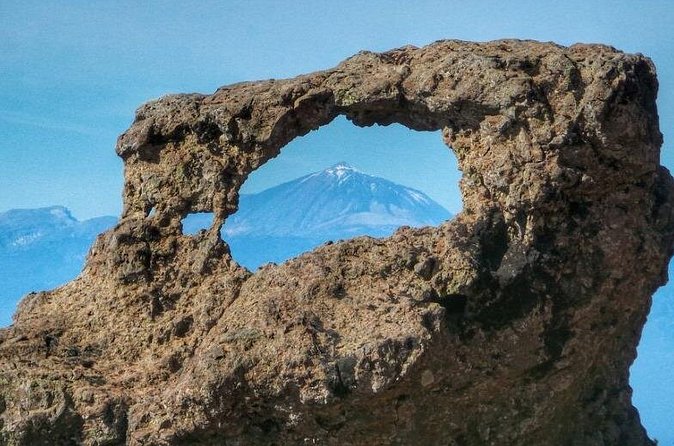
Stop 4 is Cruz de Tejeda. This is a mountainous area, and it is known for magnificent views over the island. The headline feature is the large stone cross, La Cruz de Tejeda.
This cross presides over a 17th-century entrance and marks the geographical center of Gran Canaria. That detail matters because it gives you a clear reason to pause at this spot, not just for a pretty photo.
The stop lasts 1 hour and has free admission. That makes it a good balance after the higher viewpoint stop. You are still in mountain terrain, but the time is tight enough that you can keep energy for the next towns without feeling rushed.
If the day is windy or cooler, your best move is to pick where the view is worth standing for a while. Look for the side where you can stay comfortable while you take in the long views over the island.
Fataga: palms and pine with traditional houses and a valley view
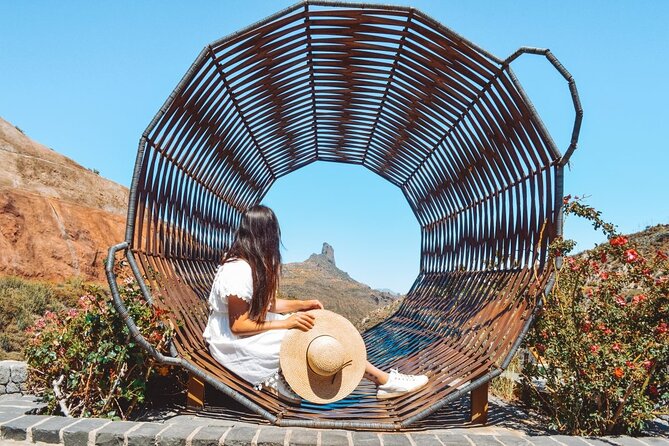
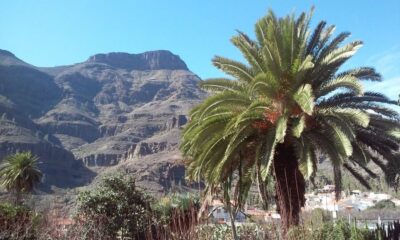
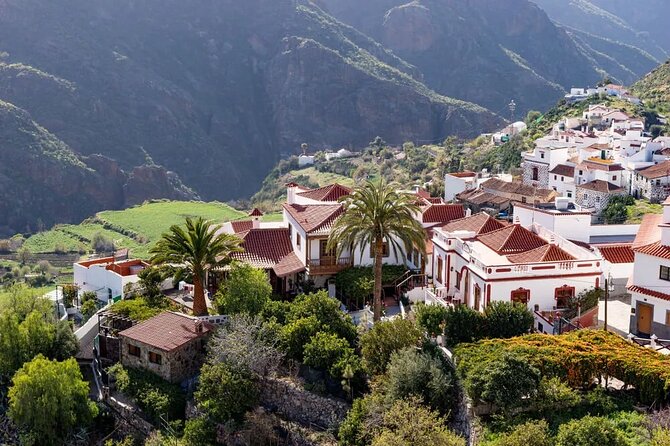
Stop 5 is Fataga, a town that feels different from many other inland stops. Instead of just dry mountain terrain, Fataga is known for palm trees and Canarian pine, a pairing that feels unusual enough to be worth your attention on its own.
What makes this town a good stop in the middle of the day is the mix of vegetation and built environment. Several houses preserve their traditional Canarian character. You are not just passing through, you get time to look around and notice the way the town sits against the mountains.
And then there are the views. Fataga looks out toward mountains and the valley of a thousand palm trees. You do not need a background in geography to enjoy it, because even from town edges you can usually see how the area was shaped for a calm, lived-in feel.
This stop lasts 1 hour 30 minutes and has free admission. That is long enough to wander at a comfortable pace, but not so long that you feel stuck when the bus is waiting.
Degollada de la Yegua: a biosphere reserve viewpoint for quiet nature time
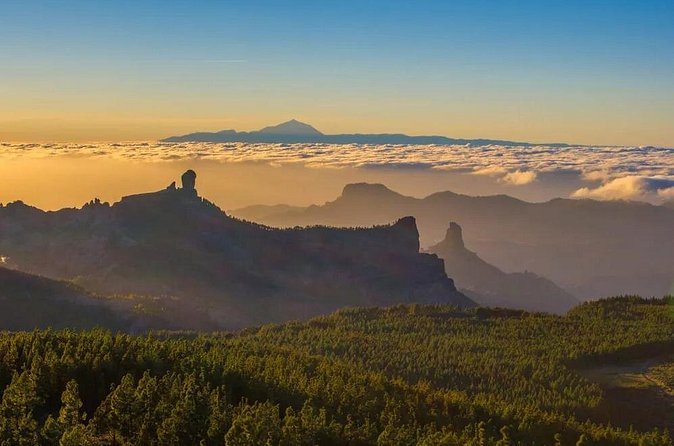
Stop 6 is Mirador Degollada de la Yegua. This is presented as one of the most special places in all of Gran Canaria, with a unique and particular view of the area. Importantly, the territory here is part of the Gran Canaria World Biosphere Reserve.
Even if you are not into the biosphere concept, this detail helps you understand what kind of stop it is. You are not just grabbing a quick photo. The goal is to give you time in an area that has been recognized for its environmental importance, so you can notice the terrain and how it changes with elevation and exposure.
This stop includes admission and lasts 1 hour 30 minutes. That is a generous block for a final viewpoint-style stop, which tells you the operator expects this one to be a slower moment at the end of the climb.
Practical note: because the day includes multiple viewpoint stops, you will be standing for a while. Wear shoes you trust on uneven ground, and consider bringing a small sun layer, even if mornings start cool.
Lunch and pacing: how the day stays enjoyable
One thing that really affects your experience on a full-day tour is pacing, not just the route. Here, the stops are spaced so you are not stuck waiting around, and you also are not left with no time to wander.
A standout point from the best feedback is the lunch stop. There is time built in for lunch, and one review highlights a three-course meal with wine and soft drinks included, described as plentiful. That matters for value because it turns a tour that could have felt like a sightseeing-only day into something closer to a full outing.
The guides also get credit for making the experience feel guided without feeling like you are on a leash. One reviewer even said you are not aware that you are on your own. Translation: you feel supported, which is comforting when you are doing multiple stops in a foreign language environment.
I also like the mix of free and included admission stops. You are not paying extra at each stop, but you are also not stuck with every attraction being paid-only. It keeps the day feeling fair.
Price and value: is $108.84 a good deal?
At $108.84 per person for an approximately 8-hour day, the price is competitive when you consider three things.
First, you are getting a full routing with multiple stops that cover both culture and elevated natural viewpoints. That kind of inland day takes real effort to organize, especially when you want timing that allows wandering.
Second, admission is included for key nature stops. You do not just pay for the drive. Caldera de los Marteles, Pico de las Nieves, and Mirador Degollada de la Yegua include admission. That adds up compared to an itinerary where you would pay for everything yourself.
Third, pickup is offered and the tour is capped at 20 travelers. When a tour is smaller and starts smoothly, the day usually feels more efficient, and you are less likely to lose time.
Add in the lunch inclusion mentioned in review feedback, and the value equation gets even easier to like. If you want a day where you do not have to plan, price-check, and navigate multiple stops on your own, this is exactly the kind of service that earns its keep.
Who this tour suits best (and who should rethink it)
This excursion is a strong match if you want:
- A one-day inland overview of Gran Canaria
- A mix of town history feel and high viewpoint time
- English guidance with a small group format
- A day that is structured enough that you can relax
It might be less ideal if:
- You only care about beach time and sea views (this is inland and mountain-focused)
- You are sensitive to cooler, higher-elevation weather changes
- You need guaranteed far-distance visibility, since the day depends on good weather
If your priority is broad understanding of the island center, the route makes sense. If your priority is maximum flexibility to stop whenever you want, you may prefer a DIY plan. But for most visitors, guided structure is the point.
Should you book this Center of Gran Canaria excursion?
I would book it if you want a day with real variety, thoughtful stop timing, and at least a couple of big-view moments that can feel like a highlight rather than just another viewpoint.
The combination of Telde’s old quarters, volcanic caldera terrain, Pico de las Nieves, the 17th-century Cruz de Tejeda marker, Fataga’s palm-and-pine town feel, and the Mirador Degollada de la Yegua biosphere stop is a lot for one day. And with English guidance from Francine and Naomi referenced in strong feedback, you are likely to come away feeling like the day made sense, not just that you drove around looking at things.
If you book, set yourself up for success: bring a light layer, wear comfortable walking shoes, and check the weather close to departure so you can adjust your expectations for distance views.
FAQ
How long is the excursion to the center of Gran Canaria?
It runs for approximately 8 hours.
What time does the tour start?
The start time is 9:00 am.
Is English available on this tour?
Yes, the tour is offered in English.
Is pickup included?
Pickup is offered.
How large is the group?
The tour has a maximum of 20 travelers.
Which stops include admission tickets?
Admission is included for Caldera de los Marteles, Pico de las Nieves, and Mirador Degollada de la Yegua. Admission is free for Telde, Cruz de Tejeda, and Fataga.
What happens if the weather is poor?
This experience requires good weather. If it is canceled due to poor weather, you will be offered a different date or a full refund.
Are service animals allowed?
Yes, service animals are allowed.
Just added on Gran Canaria
- Family Monster 4 Seater Buggy
★ 5.0 · 1 review - Catamaran Eco Tours in Gran Canaria
★ 5.0 · 1 review - Flying Dress Photoshoot in Gran Canaria
★ 5.0 · 1 review - Cheese Workshop
★ 5.0 · 1 review - Canarian cheese tasting
★ 5.0 · 1 review - Private Transfer Gran Canaria Port to Gran Canaria Airport (LPA)
★ 5.0 · 1 review
Tours, compared.
From Mogán/Maspalomas/Arguineguín: Gran Canaria Day Tour
Read our review →
South Gran Canaria: Off-Road Valleys & Villages Jeep Tour
Read our review →
The Volcano Heart Tour: Hiking, Tasting and Sunset Experience
Read our review →